How to Mix Different Wood Shades & Tones in Your Home

Mixing wood tones in your home can challenging, but doing it right can make all the difference in your design. Color, pattern, texture, and design variations are important in decorating because they keep things interesting. Match-y match-y floors and furniture look staid and flat when it comes to wood finishes. It's also impractical for those of us who don't purchase everything all at once. People are also more likely to piece together a room over time, combining inherited, found, and purchased objects in various finishes.
Mixing up different wood shades adds a great variation in color, patterns, and texture in any decor style and any room. This makes any space more appealing to a wider variety of people. There are several things to keep in mind while designing with wood, though it doesn’t look like space was just thrown together.
Furniture stores and catalogs show matching wood furniture because they’re selling those sets. A skillful mix of different wood finishes looks far more stylish in an entire room, but the process isn't always intuitive. To keep the look cohesive, here are some of the tips for mixing wood finishes into your home:
Choose similar undertones.
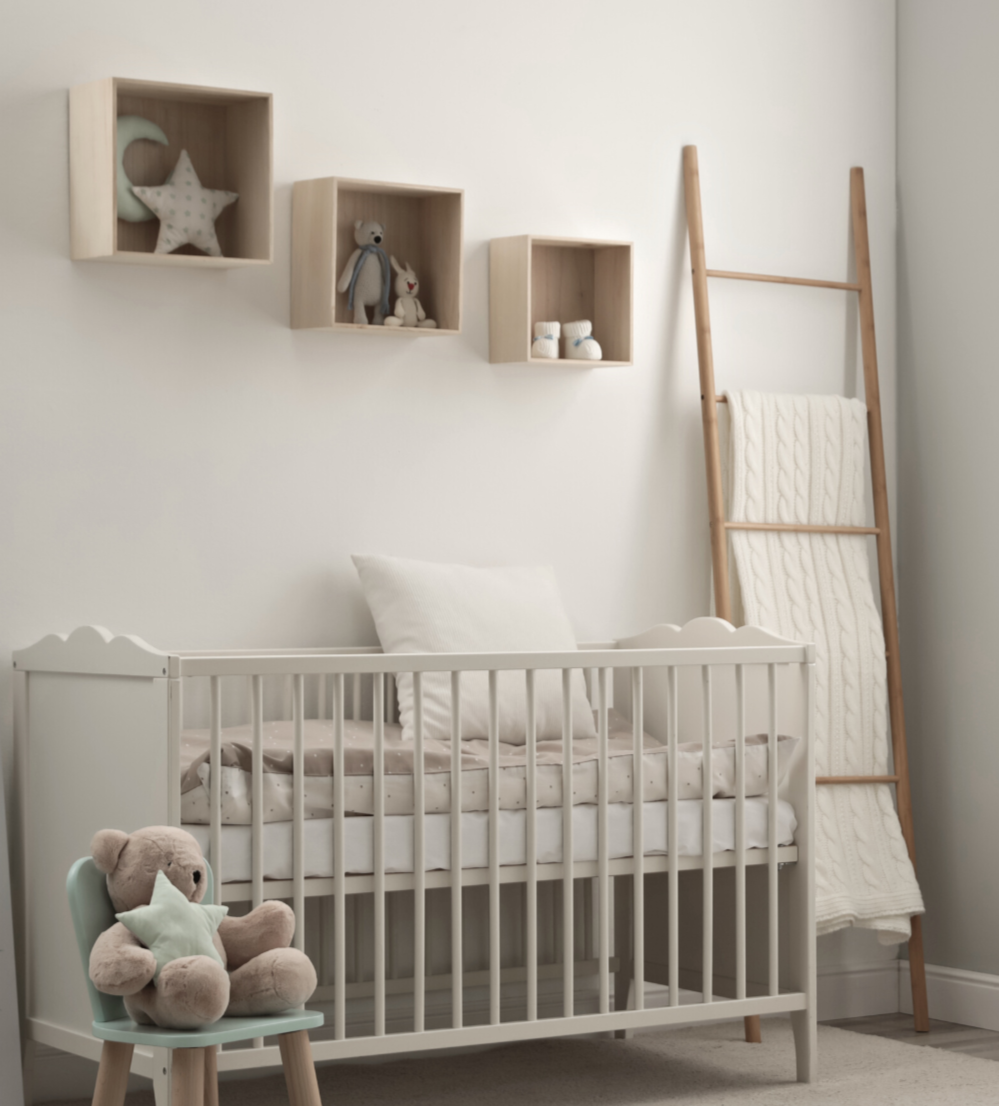
Woods are like seasons in that some are warm and golden, while others are crisp and cool. Using similar undertones in your collection will help create a sense of harmony in your space and prevent it from appearing lopsided. Consider selecting additional pieces in a similar warm palette if your room is dominated by warm wood tones like walnut, cherry, and rosewood. Similarly, if your wood scheme favors cooler colors, pair it with cool wood grains that complement it.
Designate a ruling tone.
A sea of identical tones will vanish into oblivion and become invisible to the naked eye. Toss out the monotony by making one wood tone the room's focal point and surrounding it with complementary darker or lighter tones. If you're uncertain, start with the largest surface you have – the floor, the sofa frame, or the center table.
If you're new to wood-mixing and concerned about the difference, choose a flexible anchor piece with various wood finishes. This will bind your elements together by echoing your current wood tones.
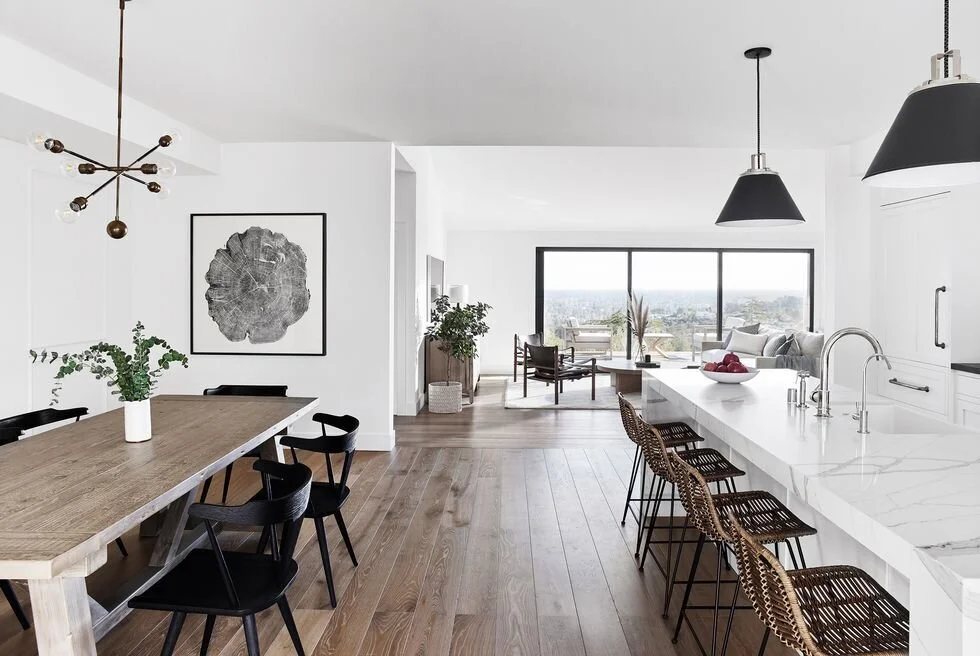
via R. Bradley Knipstein
Contrast furniture and flooring.
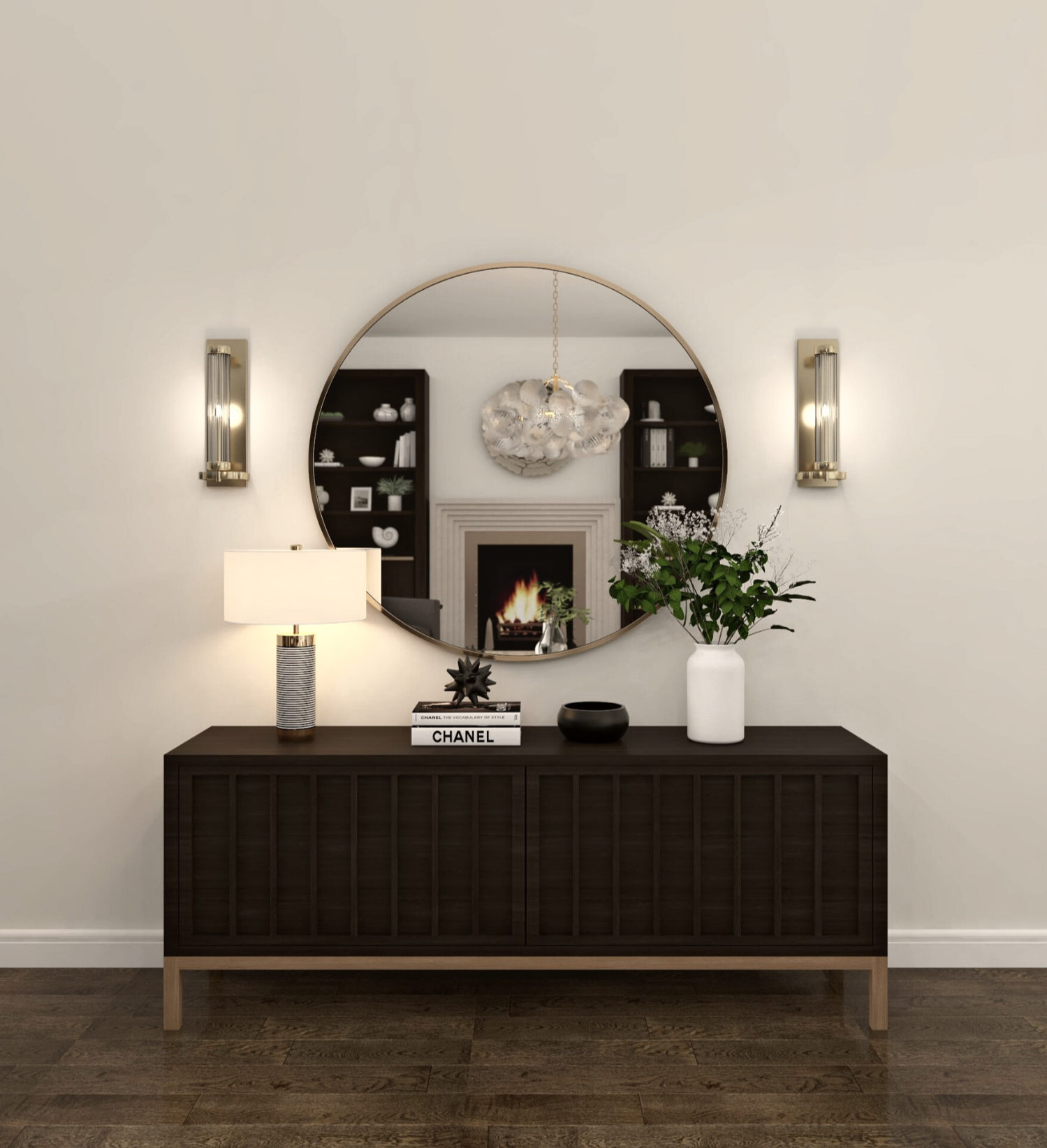
Ever notice how traditional foyers, meeting rooms, and offices built for VIP seemed so dark and monotone? That is the result of a lack of contrast. The best way to break the monotony is to pair light furniture with darker wood tones and vice versa. Choose the deep reddish-brown color of mahogany for furniture to pair with lighter wood flooring.
Unify with a theme.
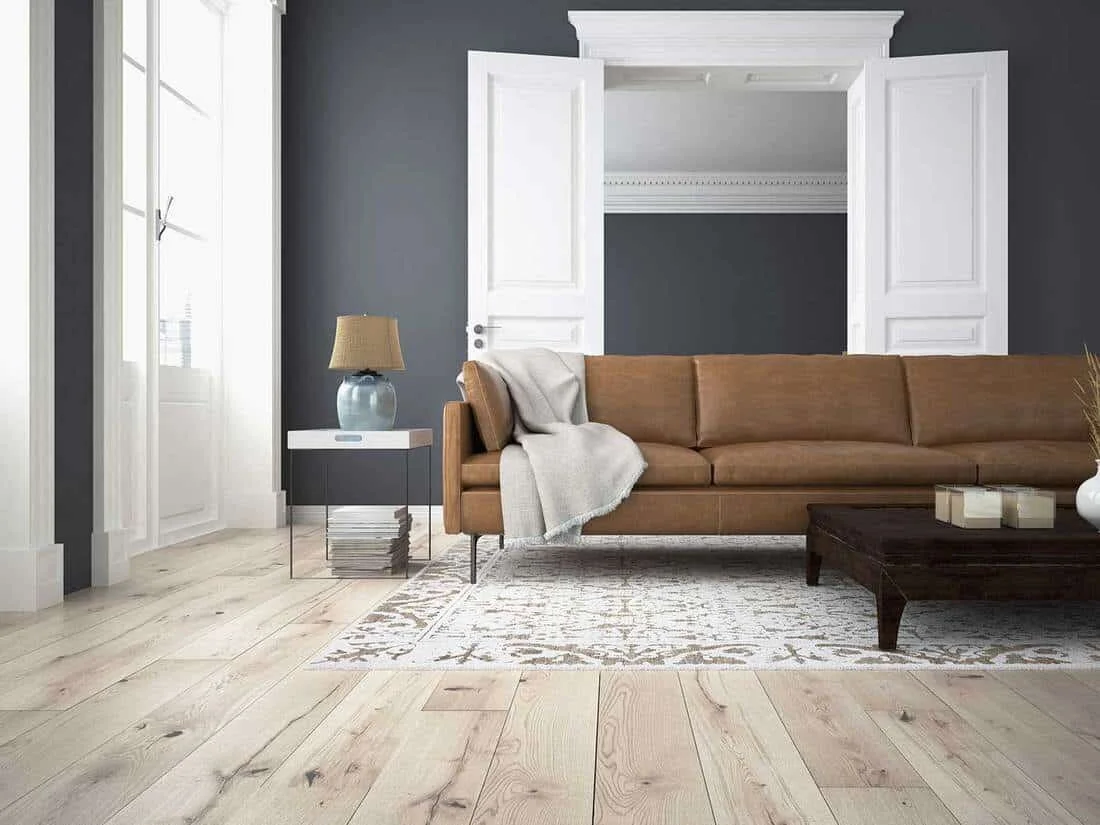
As previously said, color temperature is an unfailing unifying method for wood parts. However, other important elements, such as style, form, and time, should be considered. For example, wood pieces in a similar style may add character to a mid-century modern decor scheme. Similarly, a space with a lot of sinewy furniture will benefit from more curvy parts.
via homedecorbliss.com
Bring in color with accents.
Are you concerned that your room will be drowned out by a variety of wood tones and grains? One or two central accent colors will help them stand out. Get throw pillows, lamps, rugs, and knickknacks in a single-color scheme to introduce a consistency that counterbalances the diversity of your wood.
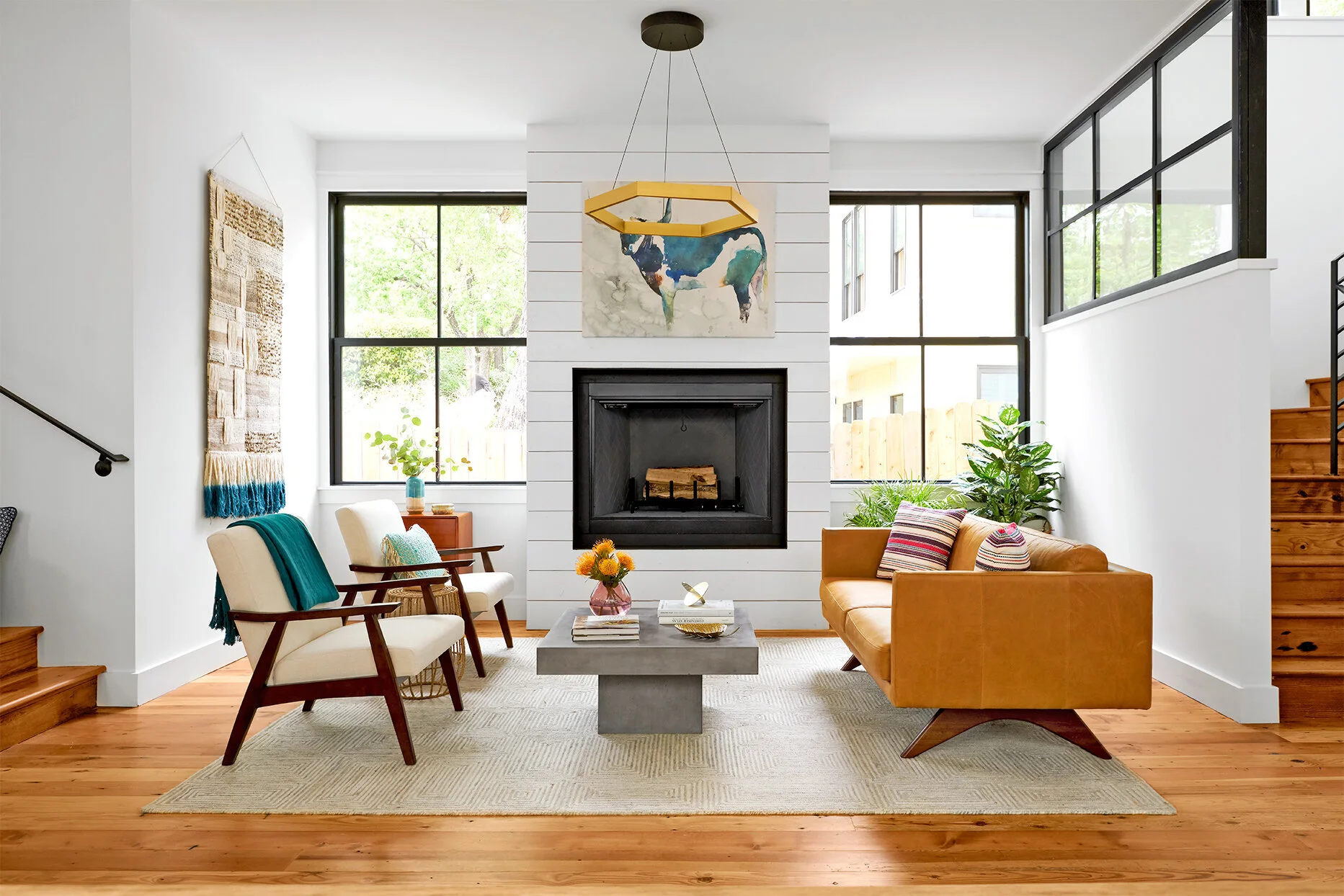
If you're worried about the contrast between wooden furniture and a wooden floor, particularly if the two are of different tones or grains, introduce a rug or carpet as a go-between.
Use a buffer.
Placing a wood table directly on top of a different wood floor draws attention to their dissimilarity. Like a rug or carpet, adding something in between lets them breathe a little bit and smooths the transition.
via Nathan Schroder Photography
Let your grains rule.
Choose pieces with varying grain patterns and sizes to produce an eclectic visual appeal when uniting various wood grains into a cohesive whole.
The grain pattern refers to the wood's stripes, circles, or dots, while the grain size refers to the pattern's scale. You can play around with your grains as long as you remain within the same color family.
Consider layering larger wood grains if you're going for a laid-back, casual look. Finer grains, on the other hand, are an excellent way to convey formality.
Limit the number of species.
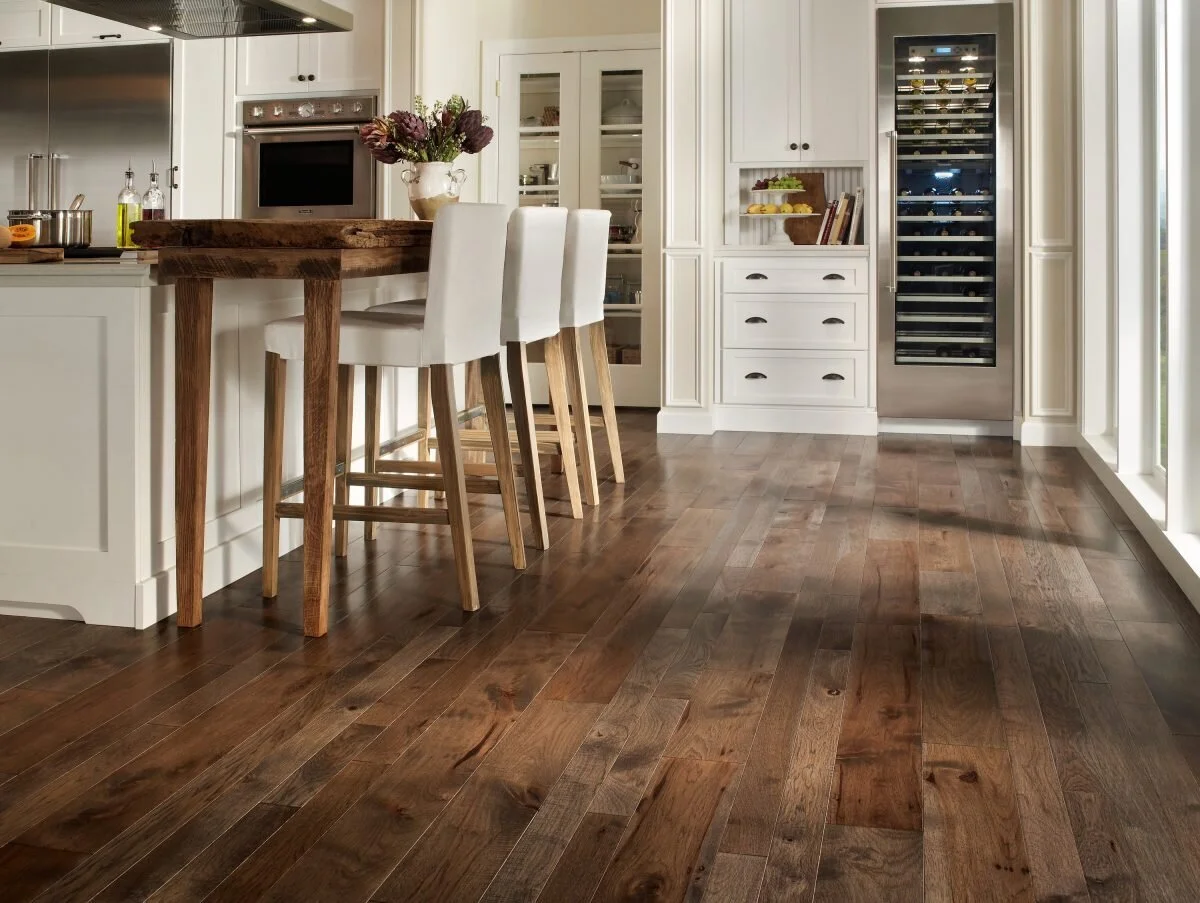
Speaking of scale, large quantities of one species of wood (i.e., flooring) should be considered alongside the total number of wood species within a room. That said, we think that a max of 3-ish wood tones in one space is generally acceptable, assuming that the individual pieces share a similar shape or style. Except for a huge space with different ‘zones,’ increasing the number of species thrown into the mix can end up looking chaotic and disjointed very quickly.
via Wareremoval.com
Balance the tonality of your room.
When using multiple finishes in a space, placement is crucial. Make sure that similar tones are equally spaced in your room. At one end of your room, dark tones are huddled together; for example, they can throw off the visual balance.
Don’t go too nuts.
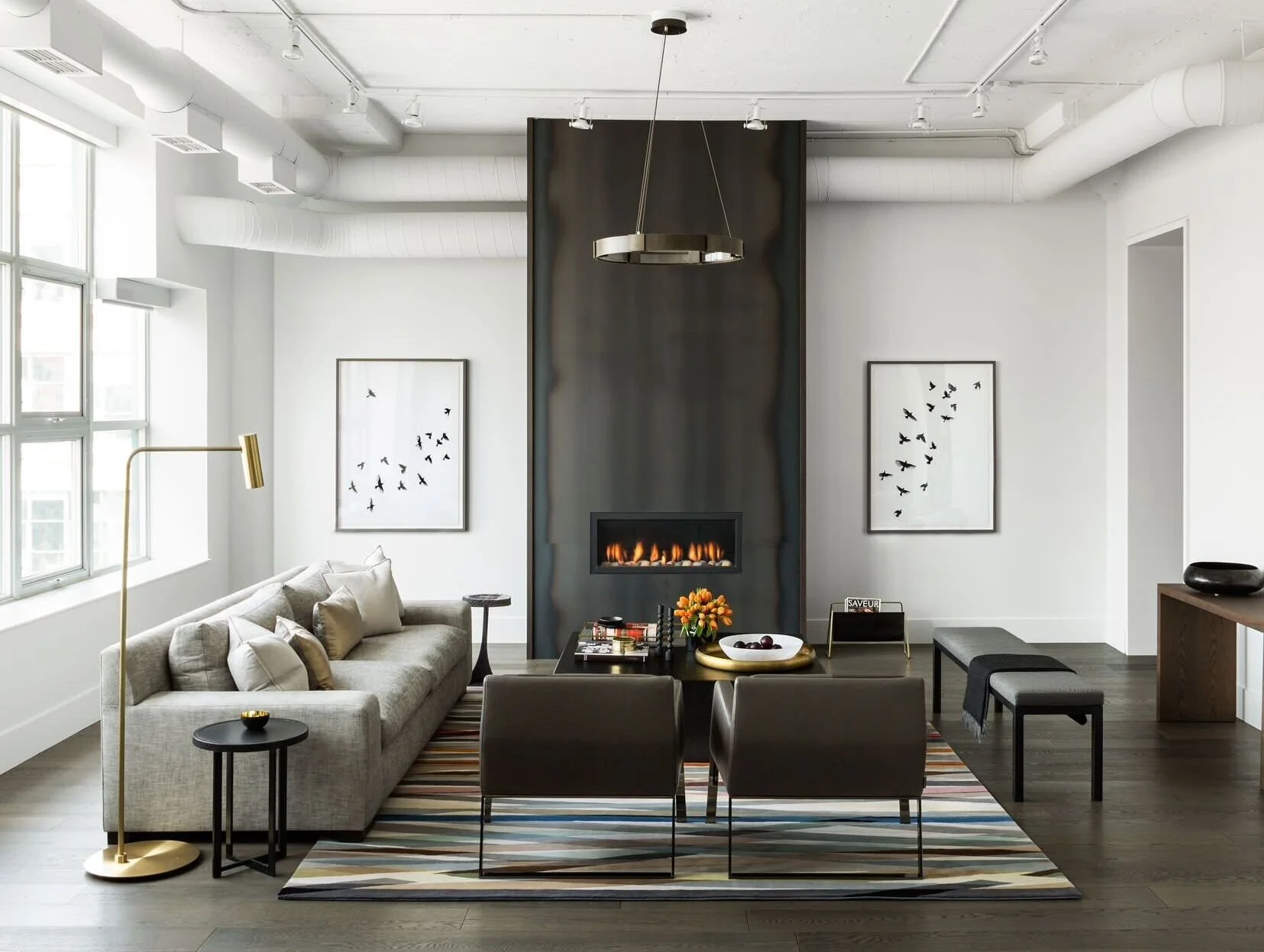
Keep your choices to two or three types of finishes to start, and repeat each finish a couple of times throughout the room. Your space will be less chaotic and feel more balanced throughout.
via Houzz.com
Introduce non-wood finishes.
If you have a lot of wood in your place, use non-wood finishes to break up the monotony. Surfaces with textured veneers and laminates, metals, and paint can be an alternative to an overly woody look.
When in doubt, white it out.
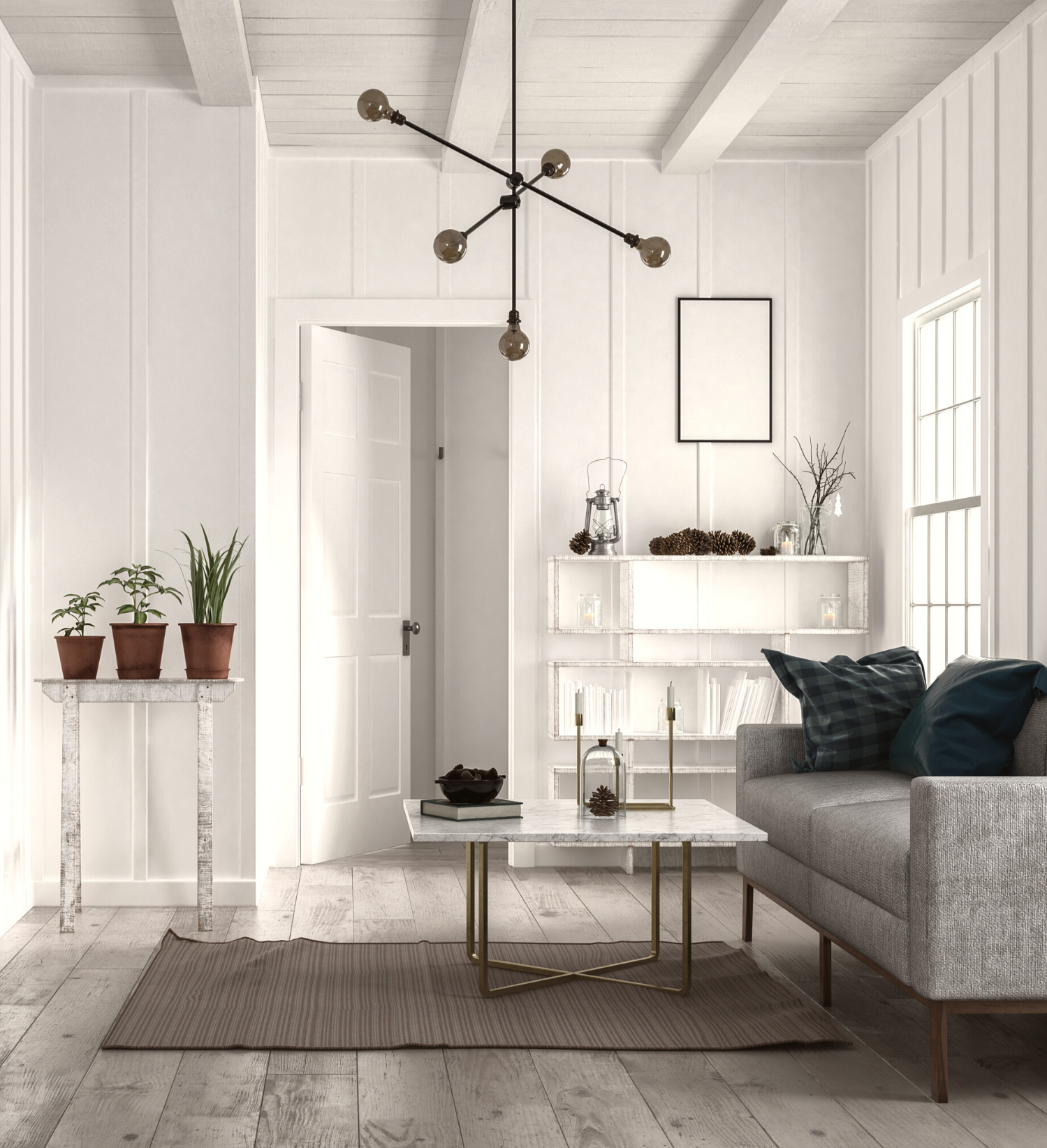
White and wood are one of those magical combinations, like basil and tomatoes. They work when you have a variety of wood tones that would otherwise look nutty, intersperse some white sections (with paint, furnishings, etc.) to break it up and calm down the potential crazy.
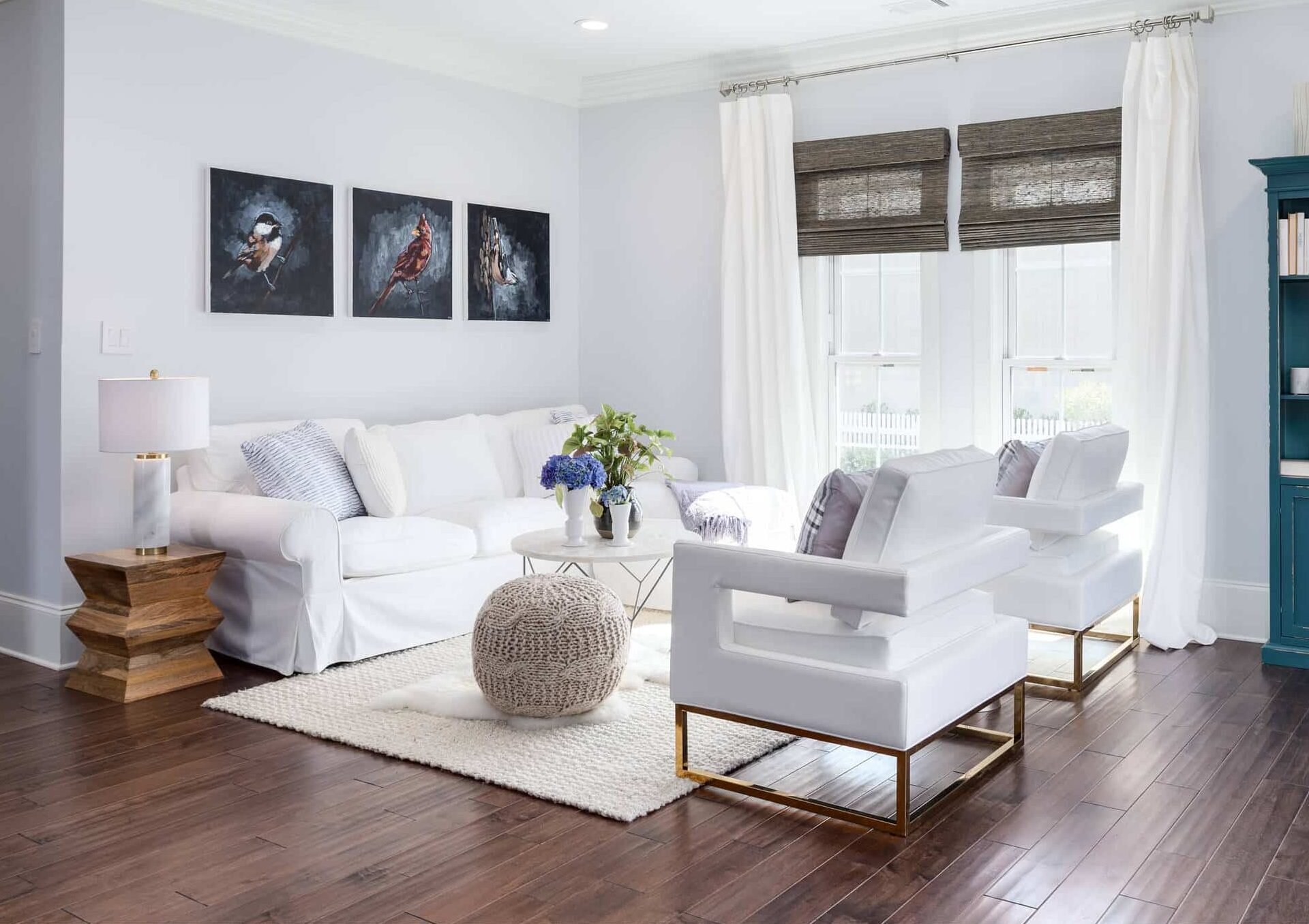
In conclusion, When you have different wood shades and finishes in a room, it’s important to place your furnishings in the right spot. Consider their proximity or closeness to each other.
I hope you have enjoyed it!
Talk to you soon,
keysi